
Simple Music Theory For Beginners
Learn core music theory and start writing songs.
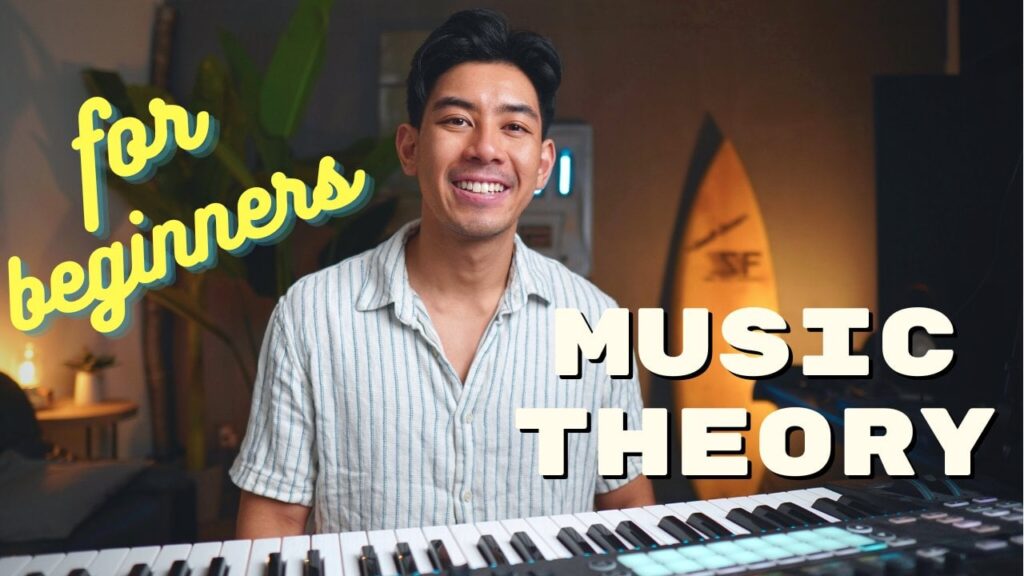
Simple Music Theory For Beginners is a compact, practical online class that introduces core music theory concepts in a way that is directly applicable to songwriting and arrangement for novice musicians.
Taught by Mike and Matty, the course covers notes and pitches, major and minor scales, chord construction and progressions, inversions, melody crafting, and basic rhythm, and includes a hands-on project so beginners can apply these concepts to create original songs.
At a Glance
Simple Music Theory For Beginners is an introductory online class that teaches foundational music concepts and practical song-writing techniques.
Taught by Mike and Matty, it covers notes and pitches, major and minor scales, chord building and progressions, inversions, melodies, and basic rhythm, and includes a hands-on project to apply the skills.
| Level | Beginner |
| Rating | 4.6 out of 5 |
| Duration | 40+ minutes |
| Languages | English |
| Learners | 1K+ students |
| Certificate | No certificate |
| Access | Included with subscription; access while your subscription is active |
| Course includes |
|
| Price | Subscription-based; included with platform membership (monthly or annual plans) |
What This Course Teaches
This course organizes outcomes as measurable competencies so learners can apply theory directly to songwriting and simple analysis tasks.
Students should finish able to construct scales and chords, assemble progressions, compose matching melodies, use inversions, and apply basic rhythmic patterns to original pieces.
How the Course Is Structured
Simple Music Theory For Beginners is organized as a compact, linear sequence of lessons that take a novice from basic concepts to a hands-on songwriting project.
The class is delivered as 11 short lessons totaling about 47 minutes of video instruction.
Curriculum overview
01Introduction▾
Sets expectations, course goals, and how to approach the lessons and project.
02Class Project▾
Explains the capstone assignment and recommended deliverables for practice.
- Capstone project: choose a key and scale, create a chord progression, and upload notation or audio
03Notes & Pitch▾
Introduces note names, pitch relationships, and how to read basic pitch information.
04Keys & Scales▾
Shows how to construct major and minor scales and determine key signatures.
05Relative Minor▾
Explains the concept of relative minors and how to find and use them in songs.
06Chords▾
Covers chord construction from scale tones, focusing on triads and basic voicings.
07Chord Progressions▾
Demonstrates common progressions and how chord functions support song movement.
08Inversions▾
Shows how chord inversions change voicings and affect bass lines and transitions.
09Melodies▾
Covers techniques for writing melody lines that sit over chord progressions.
10Rhythm▾
Introduces basic counting, beat placement, and simple rhythmic patterns for songs.
11Wrap Up▾
Final recap of concepts and suggestions for continued practice and next steps.
Audience & Requirements
This class targets complete beginners and casual musicians who want a compact, practical grounding in music theory to start writing and arranging simple songs.
It suits hobbyists, bedroom producers, and intermediate players seeking a concise fundamentals refresher they can apply immediately to a songwriting project.
- Creative hobbyists who want to write original songs.
- Bedroom producers adding basic harmony and melody skills to beats.
- Self-taught musicians seeking a clear refresher on fundamentals.
- Music students who need a practical primer before deeper study.
- No prior music theory required.
- An instrument (piano/keyboard or guitar) or a MIDI/controller to try examples practically (recommended).
- A way to record or export audio or create a PDF of notation if you plan to submit the class project.
Final Verdict
This class is a practical, efficient introduction to music theory that delivers immediately usable skills for beginners, bedroom producers, and hobbyist songwriters.
Given its strong rating and sizable learner base, it represents good instructional value—especially if you already subscribe to the platform that provides access. However, it does not issue a formal certificate and access requires an active subscription, so it is a weaker choice for learners seeking a credential or a one-off, lifetime-purchase course.