
Test Automation Fundamentals
Learn to design, implement, and maintain automated tests
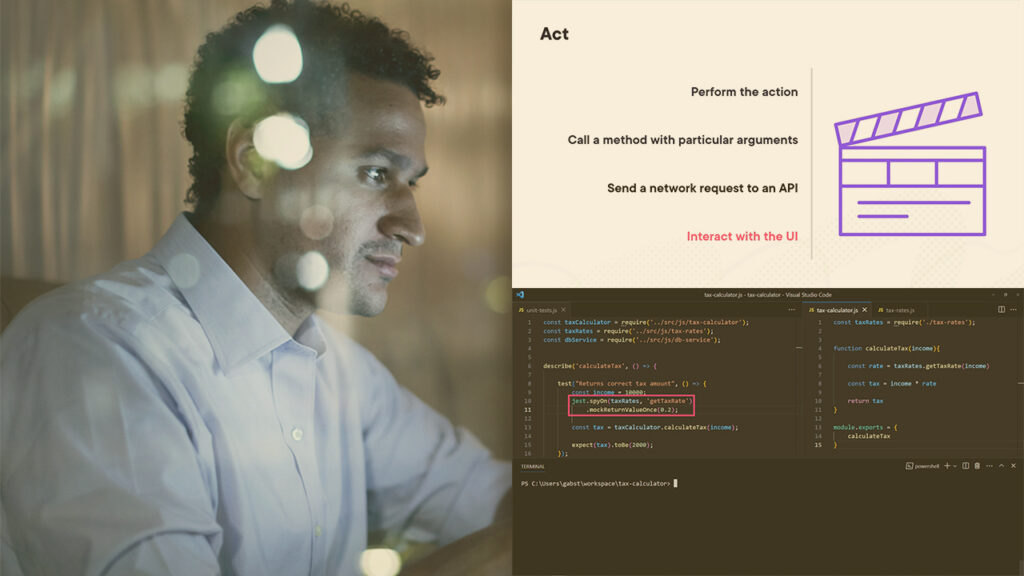
Test Automation Fundamentals is a focused, practical course that introduces core approaches to test automation and the skills needed to design reliable, maintainable test suites across different stacks.
Learners build measurable abilities such as writing unit, integration, and end-to-end tests, implementing test-data strategies, selecting appropriate automation frameworks, and integrating automated checks into CI pipelines to support repeatable, high-quality releases.
At a Glance
Test Automation Fundamentals is a practical course on automating software tests taught by Gabriel McNeilly.
The course covers different types of automated tests, principles for writing maintainable tests, tooling and framework selection, test-data strategies, and planning an automation strategy.
| Level | Beginner |
| Rating | 4.6 out of 5 |
| Duration | 5+ hours |
| Languages | English |
| Certificate | Certificate of completion |
| Access | Access for as long as your subscription is active |
| Course includes |
|
| Price | Subscription-based; access included with individual or business plans |
What This Course Teaches
The course frames outcomes as concrete, actionable competencies you can apply to real projects rather than abstract concepts.
Learners will gain the ability to choose what to automate, design and implement maintainable tests and suites, and integrate those tests into team workflows for reliable releases.
How the Course Is Structured
The course is organized into 9 modules and runs about 5 hours 10 minutes in total.
It progresses from a short orientation through core automation concepts, tooling and suite construction, test-data approaches, execution and maintenance, and finishes with planning and strategy for adopting automation at scale.
Curriculum overview
01 Course Overview ▾
Brief orientation to the course goals and how the material will be delivered.
02 Understanding Test Automation ▾
Introduces different automated test types, the test pyramid, and includes demos of unit, integration, and end-to-end tests.
03 Identifying Valuable Test Cases ▾
Covers how to create and prioritize test cases for unit, whitebox integration, API, and end-to-end testing.
04 Assessing Frameworks and Tools ▾
Surveys the tooling landscape, explains frameworks and BDD, and guides selection of the right tools for a project.
05 Creating an Automated Test Suite ▾
Explains suite design patterns such as Arrange–Act–Assert, naming practices, and techniques to minimize complexity in tests.
06 Think FIRST Before Writing Automated Tests ▾
Covers test performance, isolation, repeatability, self-validation, and timing considerations that make tests reliable and fast.
07 Handling Test Data ▾
Presents data strategies for tests, including static data, data seeder approaches, and just-in-time data techniques.
08 Test Automation Execution & Maintenance ▾
Shows running automated tests, CI integration, reporting, troubleshooting, and how to maintain test infrastructure and suites over time.
09 Planning & Executing a Test Automation Strategy ▾
Guides assessing organizational readiness, defining success metrics, stakeholder buy-in, and differentiating strategies for new vs. existing projects.
Audience & Requirements
Test Automation Fundamentals targets practitioners who need practical, transferable automation skills—principally QA engineers, developers, and engineering leads looking to standardize testing practices across projects.
It is intended for people who will choose what to automate, design maintainable test suites, and embed automated checks into team workflows and CI processes.
- QA engineers learning foundational automation principles and test design.
- Software developers responsible for writing and maintaining automated tests.
- Test leads or engineering managers planning an organization-wide automation strategy.
- DevOps or CI engineers integrating automated tests into pipelines.
- No special prerequisites; course is presented at a beginner level.
- Comfort reading basic code and familiarity with testing concepts is recommended.
- A code editor and willingness to run example tests locally are useful for hands-on follow-up.
Note: Although the course is labelled Beginner, several modules cover CI integration, test-data strategies, and maintenance practices that work best if you already have some exposure to programming or basic testing workflows.
Final Verdict
Test Automation Fundamentals is a practical, well-paced introduction that delivers actionable skills and clear guidance on tooling, test design, and automation strategy; given its strong platform rating and the fact that a certificate and subscription access are included, it represents good value for practitioners seeking a concise, applied overview.
Recommended for QA engineers, developers, and engineering leads who need a transferable, low-friction way to start or standardize test automation across projects.


 DataCamp
  LinkedIn Learning